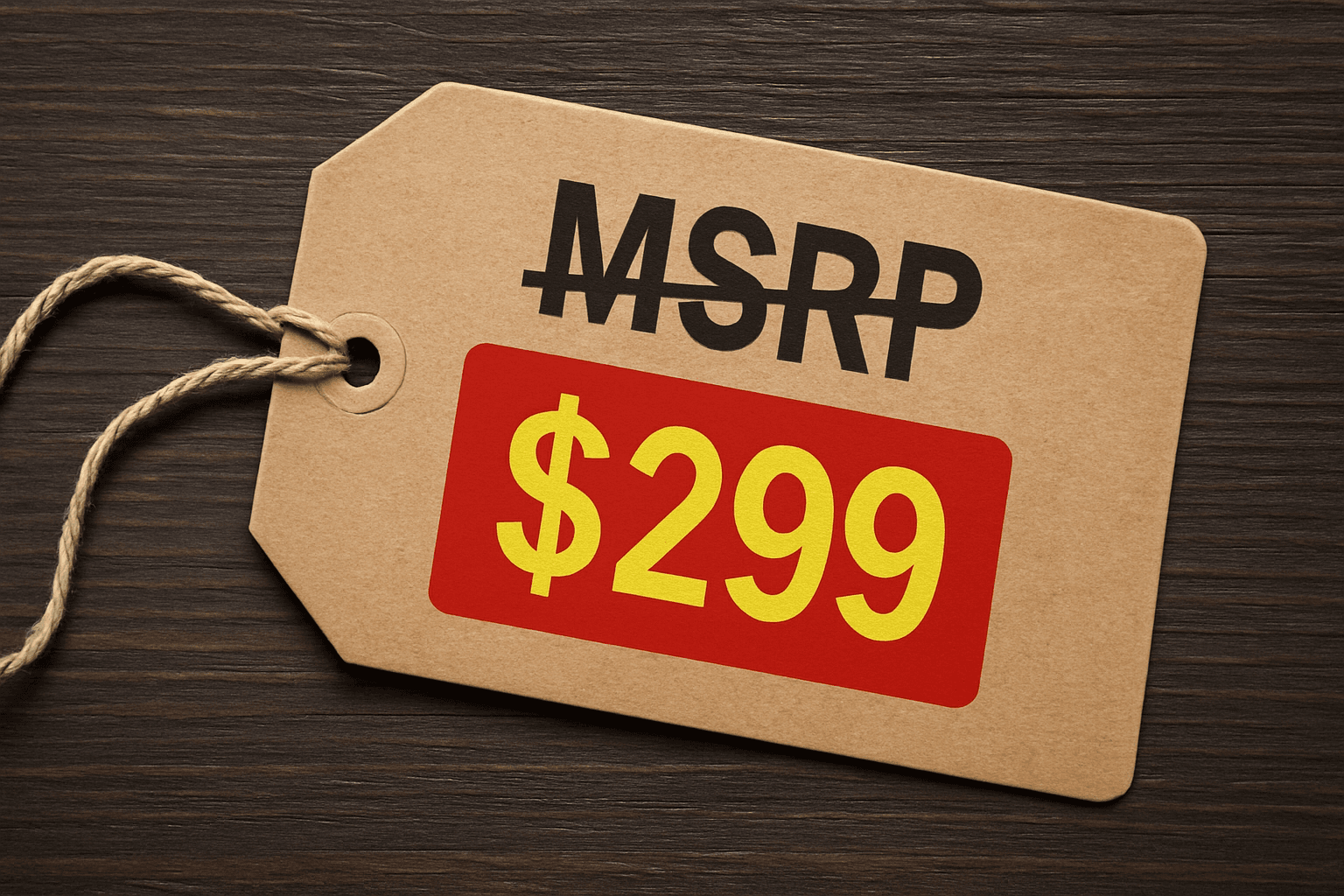
What Is MSRP? Understanding the Manufacturer's Suggested Retail Price
When you're shopping for anything from electronics to automobiles, you've likely come across the term MSRP. But what exactly is MSRP, and more importantly, why is it a figure you should rarely, if ever, pay? Understanding this common deal terminology is crucial for becoming a smarter, more confident shopper.
MSRP stands for Manufacturer's Suggested Retail Price. As the name implies, it's a price that the manufacturer recommends retailers sell their product for. It's often referred to as the "list price" or "sticker price." Manufacturers provide MSRPs to help standardize pricing across different retailers, giving consumers a benchmark and retailers a starting point for their pricing strategies.
However, it's vital to remember that MSRP is just that: a suggestion. It's not a mandatory price, and retailers are free to price items above—or more often—well below MSRP.
Why MSRP Is Often Just a Starting Point
There are several key reasons why the MSRP rarely represents the final price you should pay:
- Competitive Market: Retailers operate in highly competitive environments. If one store sells a product at MSRP, another might offer it at a lower price to attract customers, forcing others to follow suit.
- Profit Margins: Retailers purchase products from manufacturers at wholesale prices, which are significantly lower than the MSRP. This allows them a healthy profit margin even when selling below the suggested price.
- Sales and Promotions: Sales, discounts, and promotions are constant in retail. These events are designed to move inventory and boost sales, and they nearly always bring prices well below MSRP.
- Market Demand: If a product isn't selling well, retailers will drop the price below MSRP to clear stock. Conversely, for highly sought-after items, retailers might initially stick closer to MSRP, but even then, deals often emerge.
- Negotiation (Especially for Big-Ticket Items): For larger purchases like cars, furniture, or appliances, the MSRP is explicitly a starting point for negotiation. Smart buyers never walk into a dealership or store expecting to pay sticker price.
When You Might See (or Even Pay) MSRP
While we advocate for rarely paying MSRP, there are a few scenarios where you might encounter it:
- Brand New, High-Demand Products: When a revolutionary new product just hits the market and demand far outstrips supply, retailers might stick close to MSRP. Think about a new gaming console launch or a highly anticipated smartphone.
- Exclusive or Boutique Items: Some niche or luxury items sold by exclusive retailers might adhere more closely to MSRP due to controlled distribution and perceived value.
- Small Retailers with Less Buying Power: Smaller shops might not get the same wholesale discounts as larger chains, making it harder for them to offer significant reductions from MSRP.
- Lack of Research: The most common reason people pay MSRP is simply a lack of awareness or research. They don't know that better deals exist.
How to Avoid Paying MSRP and Save Money
The good news is that avoiding MSRP is usually quite simple. Here's how:
- Always Research Before You Buy: Before making any significant purchase, compare prices from multiple retailers online and offline. Use price comparison websites and browser extensions.
- Wait for Sales and Promotions: Unless you need an item immediately, patience pays off. Major holidays (Black Friday, Prime Day, Memorial Day, etc.) are prime times for discounts. Even outside of these, weekly ads and seasonal sales are common.
- Look for Coupons and Promo Codes: Always search for coupons or online promo codes before checking out. Even a small percentage off can add up.
- Consider Price Matching: Many retailers will price match a competitor's lower price. This is a powerful tool to ensure you get the best deal without visiting multiple stores. (For more details, see our guide on Price Match Secrets).
- Negotiate (Where Applicable): For items like cars, appliances, and sometimes electronics, don't be afraid to negotiate. Be polite but firm, and be prepared to walk away if the price isn't right.
- Check Open-Box or Refurbished Options: Many retailers offer "open-box" or "refurbished" items at a significant discount. These are often like new but can't be sold as such.
In conclusion, view MSRP not as a price you must pay, but as a maximum suggestion. With a little research and strategic timing, you can almost always find a better deal. With this knowledge, you're ready to join savvy shoppers who almost never pay full price!